A PTFE lined valve is an industrial valve that features an internal PTFE lining designed to protect the metal valve body from corrosive, toxic, or high-purity media. By combining the mechanical strength of metal with the chemical inertness of PTFE, these valves provide reliable flow control and excellent corrosion resistance in demanding process environments.
PTFE lined valves are widely used across chemical, pharmaceutical, semiconductor, and energy-related industries where long term performance and safety are critical.
PTFE (polytetrafluoroethylene) lining refers to a fluoropolymer layer bonded or molded onto the internal surfaces of a valve, creating a chemical barrier between the process fluid and the metal body.
Because PTFE does not react with most acids, alkalis, and solvents, it is one of the most commonly used lining materials in industrial valves.
A PTFE lined valve works by:
This design ensures safe, leak-free operation while significantly extending valve service life in corrosive environments.
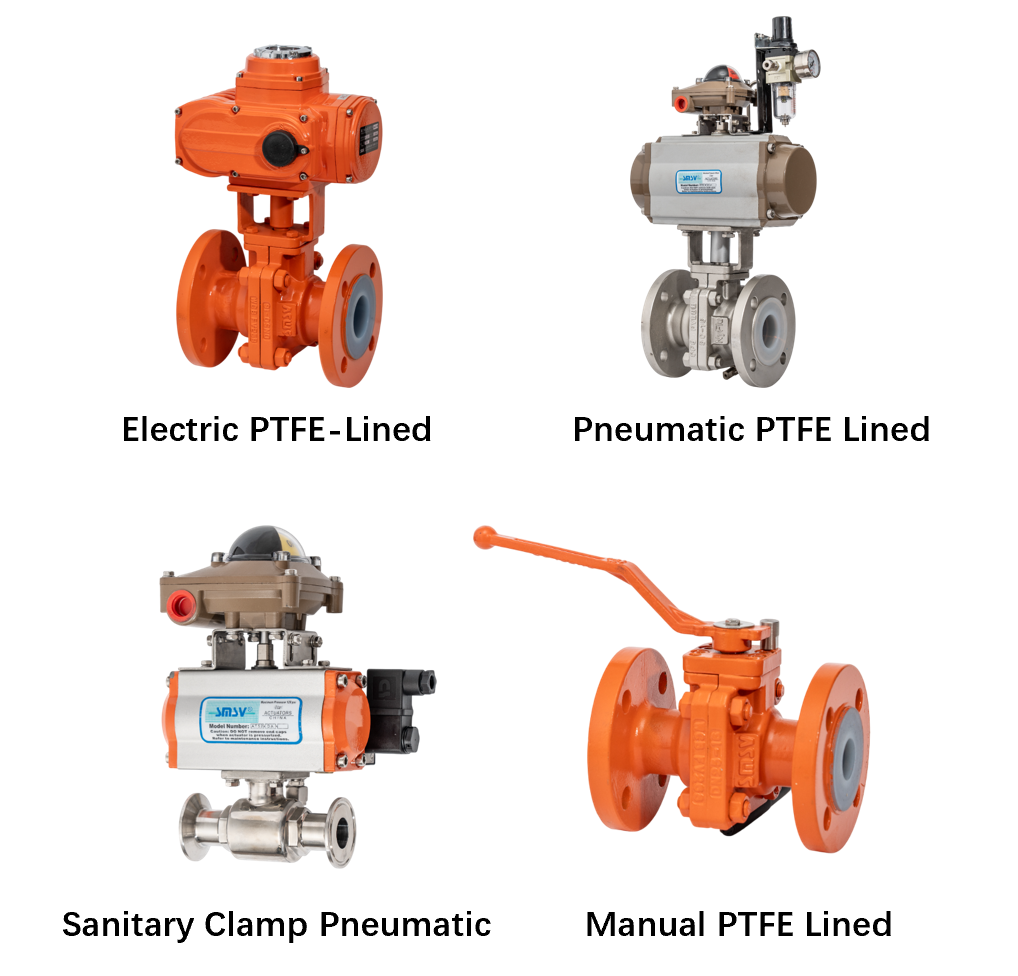
PTFE lined ball valves (often referred to as lined ball valves) use a PTFE-coated ball and seats to achieve tight shutoff and smooth flow.
Typical advantages
PTFE lined butterfly valves are lightweight, compact valves designed for large-diameter pipelines.
Typical advantages
These valves are commonly used in chemical transfer lines and utility systems.
A PTFE lined diaphragm valve uses a flexible diaphragm, typically PTFE or PTFE-faced elastomer, to isolate the process fluid from the valve body and operating components.
Typical advantages
PTFE lined check valves are used to prevent reverse flow in corrosive piping systems.
Typical advantages
PTFE lined valves are widely used in:
PTFE lining resists almost all industrial chemicals, making these valves suitable for highly aggressive applications.
PTFE lined valves are designed for long term service with minimal maintenance, reducing downtime and total cost of ownership.
The inert PTFE surface prevents media contamination, which is essential for high-purity processes.
Compared with exotic alloy valves, PTFE lined valves offer excellent performance at a lower overall cost.
Both PTFE and PFA lined valves offer excellent corrosion resistance, but there are key differences:
PFA lined valves are often selected for more demanding or high-purity environments, while PTFE lined valves remain the industry standard for general chemical service.
A PTFE lined valve is used to control the flow of corrosive or high-purity fluids while protecting the valve body from chemical attack.
PTFE lining is a fluoropolymer coating applied to valve internals to provide corrosion resistance and chemical isolation.
Yes. PTFE lined ball valves provide excellent sealing and corrosion resistance for aggressive chemical applications.
Common types include lined ball valves, lined butterfly valves, lined iaphragm valves and lined check valves.
With proper selection and operating conditions, PTFE lined valves offer reliable long term service with minimal maintenance.
PFA lined valves are preferred when higher temperature resistance, lower permeability, or higher mechanical strength is required.
A PTFE lined valve is a proven and cost-effective solution for controlling corrosive fluids in industrial systems. From lined ball and lined butterfly valves to check valves, PTFE lining delivers excellent corrosion resistance, clean operation, and long term reliability.
For more demanding applications, PFA lined alternatives provide enhanced performance, but PTFE lined valves remain the most widely used choice in chemical and process industries worldwide.