In chemical processing systems, valve lining material affects corrosion resistance, temperature stability, service life, and maintenance frequency. Among the most widely used fluoropolymer options are PTFE, FEP, and PFA lined valves. Although these materials belong to the same fluoropolymer family, their performance characteristics are different in real industrial environments.
This guide explains the differences between PTFE, FEP, and PFA lined valves, where each material is commonly used, and how to choose the right option for corrosive applications.
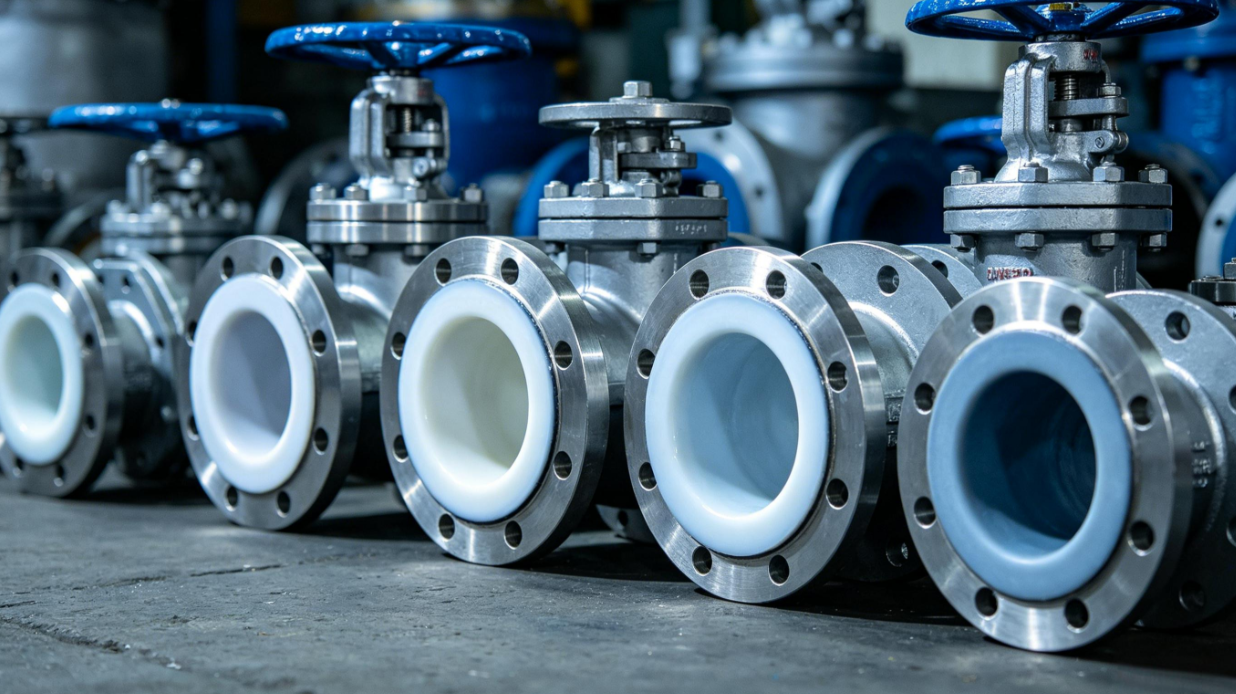
Lined valves are industrial valves with an internal fluoropolymer lining designed to isolate corrosive media from the metal valve body. These valves are commonly installed in industries such as:
The lining creates a barrier that improves chemical resistance and helps prevent corrosion, contamination, and leakage.
Common types include:
PTFE (Polytetrafluoroethylene) is one of the most recognized fluoropolymers used in industrial piping systems. It offers excellent resistance to acids, solvents, and aggressive chemicals.
PTFE is widely used in lined valves for sulfuric acid, hydrochloric acid, nitric acid, and other aggressive media.
Although PTFE performs well in corrosive conditions, it has lower flexibility compared with FEP and PFA. It can also be more difficult to process into complex valve structures.
FEP (Fluorinated Ethylene Propylene) is a melt-processable fluoropolymer developed to provide many of the benefits of PTFE while improving manufacturing flexibility.
FEP lined valves are commonly used in chemical transfer systems and corrosive fluid pipelines where operating temperatures are moderate.
FEP generally operates at lower temperatures than PTFE and PFA. Continuous high-temperature applications may reduce its long-term performance.
PFA (Perfluoroalkoxy Alkane) combines the chemical resistance of PTFE with improved flexibility and higher purity characteristics.
PFA lined valves are widely selected for demanding industrial applications that require both corrosion resistance and elevated temperature capability.
PFA lined valves are often used in semiconductor manufacturing, fine chemical production, and high-purity systems.
The table below compares the three fluoropolymer materials.
| Property | PTFE | FEP | PFA |
|---|---|---|---|
| Chemical Resistance | Excellent | Excellent | Excellent |
| Temperature Resistance | Very High | Medium to High | Very High |
| Flexibility | Moderate | Better | Better |
| Surface Smoothness | Excellent | Excellent | Excellent |
| Purity Level | High | High | Very High |
| Processability | Difficult | Easier | Easier |
| Cost | Moderate | Moderate | Higher |
| Typical Applications | General chemical industry | Medium-temperature chemical systems | High-purity and high-temperature systems |
All three materials offer strong chemical resistance, but the best choice depends on operating conditions.
Suitable for:
Suitable for:
Suitable for:
Lined butterfly valves are commonly used in larger pipe diameters and low-pressure systems.
Advantages include:
They are frequently installed in chemical plants, water treatment systems, and acid transfer pipelines.
A lined ball valve provides tighter shutoff performance and is suitable for applications requiring reliable sealing.
Advantages include:
PFA lined ball valve products are especially popular in high-corrosion chemical applications.
Before selecting PTFE, FEP lined, or PFA lined valves, evaluate the following:
Higher temperatures generally favor PTFE or PFA.
Check compatibility with acids, solvents, alkalis, and oxidizing chemicals.
Different valve structures handle pressure differently.
Semiconductor and pharmaceutical industries often prefer PFA lined valves.
Proper lining material selection can reduce downtime and replacement frequency.
Handling corrosive acids and solvents.
Maintaining clean fluid transportation systems.
Supporting ultra-pure chemical delivery.
Transporting chlorine and chemical additives.
Managing aggressive slurry and chemical media.
PTFE offers higher temperature resistance, while FEP is easier to process and commonly used in medium-temperature systems. Both provide strong chemical resistance.
PFA lined valves generally perform better in high-purity and high-temperature applications. PTFE remains a widely used and cost-effective solution for many chemical systems.
Lined butterfly valves are widely used in chemical processing, water treatment, and corrosive fluid transportation systems.
FEP lined valves can handle many aggressive chemicals, including acids, alkalis, and solvents used in industrial processing.
A lined ball valve offers strong sealing performance and is suitable for systems requiring minimal leakage and reliable shutoff.
Yes, but the lining material matters. PTFE and PFA generally perform better than FEP in higher-temperature environments.
PTFE, FEP lined, and PFA lined valves all provide reliable protection in corrosive industrial systems, but each material has different strengths.
Selecting the right lining material depends on chemical compatibility, operating temperature, pressure conditions, and system requirements. Proper valve selection can improve equipment reliability, reduce maintenance costs, and extend service life in corrosive processing environments.